

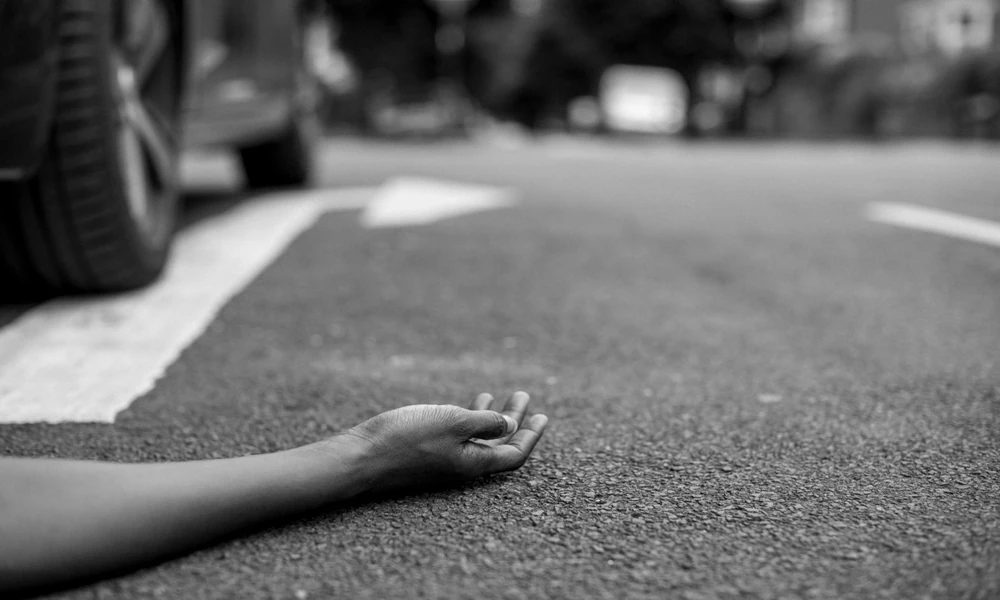
Being hit by a car while crossing the street leaves a person completely shaken, both physically and mentally. Intense pain shoots through the body, hands and legs tremble, everything in front of the eyes turns blurry, and the words of people nearby barely register. It takes some time just to absorb this shock. Then, once a person regains a bit of composure, practical questions begin crowding the mind: what should I do now, who will pay for the medical costs, or will everything fall on my own shoulders. According to data from the Governors Highway Safety Association, 1,057 pedestrians were killed in car crashes in California alone in 2023, which is about 24% higher than the national average.
And the decisions made in the first few hours and days after the accident determine the chances of receiving compensation later. So in today’s article we will discuss what to do after a pedestrian accident in California. Let’s get started.
1. Ensure Safety First and Get Emergency Medical Care
After a pedestrian accident in California, ensuring immediate safety and getting emergency medical treatment is the most important step for legal, physical, and financial protection. The detailed reasons are given below.
Physical Safety and Health Protection
Sometimes the impact of an accident can cause internal bleeding or a traumatic brain injury inside the body. The symptoms of these do not appear right away. After an accident, the body releases more adrenaline. This temporarily reduces the sensation of severe pain. As a result, even a major injury can seem minor at that moment. If treatment is delayed, a minor wound or fracture can later turn into permanent physical damage or a serious infection.
Legal and Insurance Benefits
Under California law, if you want to claim compensation later, you must have proof that the injury was a direct result of the accident. Seeing a doctor immediately creates an official medical report, which becomes the strongest evidence in a legal fight.
If you delay getting treatment, the opposing insurance company may claim that your injury was not serious, or that you were injured for some other reason after the accident. Getting treatment quickly does not give them room for such excuses. A licensed doctor is the one who can determine your future physical problems or the cost of long term treatment, which helps in recovering the correct amount of compensation.
Safety and Legal Duties
On California’s busy roads, if the car and the injured person remain in a dangerous spot after an accident, another vehicle could hit them again. So it is important to move quickly to a safe location, such as the sidewalk, and to alert traffic.
2. File a Police Report
Filing a police report after a pedestrian accident in California is an extremely mandatory and important step for legal protection and receiving compensation. The need for a police report under California law and the insurance process is discussed in detail below.
Legal Requirements
Under California Vehicle Code 20008 (VC 20008), if anyone is injured or killed in a traffic accident in California, a written report must be submitted to the police or the California Highway Patrol (CHP) within 24 hours of the accident. If the police are not called to the scene or a report is not filed, the other driver may later bring false accusations against you, such as claiming you broke traffic laws. A police report protects you from this kind of legal complication.
Strengthening Insurance Claims
California is a “fault based” state. This means that whoever is at fault for the accident, their insurance company must pay compensation. According to the rules of the California Department of Insurance, insurance companies rely most heavily on a neutral police report when evaluating a claim. Without a police report, the opposing insurance company may claim that the accident happened in some other way or that it was your fault. Because the police report clearly describes what happened, they cannot deny liability.
Preserving Objective Evidence from the Scene
A police officer arrives at the scene and creates an official, neutral account of the accident. They note the condition of the road, the weather, and the state of the traffic signals. Police record the names, phone numbers, and statements of witnesses at the scene. These witnesses can later become extremely important for your case. Police verify the driver’s license, vehicle registration, and insurance policy and add them to the report. Sometimes a driver may give false information, which is not possible when police are present.
Recording Criminal Violations
If the driver was driving under the influence (DUI), exceeded the speed limit, or ran a red light, the police issued a citation or made an arrest. This record of the offense makes your compensation case almost certain to succeed. If the driver flees the scene after the accident, filing a police report immediately is the only option. Police begin the legal process of identifying the driver using CCTV footage and other methods.
3. Collect Evidence from the Accident Scene
After a pedestrian accident in California, collecting evidence from the scene right away is extremely important, because under California law, the entire matter of compensation depends on proving who was at fault. Why evidence from the scene is so important is discussed in detail below.
Establishing Liability
Under California law, if you bear even the slightest fault (even 1%) in the accident, your compensation amount is reduced proportionally. Photos, videos, or CCTV footage from the scene can prove that the driver was entirely at fault for the accident, which secures your full compensation. Drivers often later claim that the pedestrian suddenly ran in front of the car or broke a traffic law. Evidence from the scene easily disproves this kind of false claim by the driver.
Countering Insurance Company Tactics
Insurance companies always try to reduce the amount of compensation or reject the claim altogether. If there is undeniable evidence from the scene, they cannot question the truth or severity of the accident. Photos of injuries to your body or torn clothing at the scene prove how severe the impact was, which later helps determine the correct financial value of your mental and physical trauma.
Preserving Evidence That Disappears Quickly
Skid marks on the road, broken glass, or debris from the vehicle are cleared away after a short while. These help in understanding the vehicle’s speed and the direction of the accident, and they are lost forever if not photographed quickly. Whether there was low light at the time of the accident, whether the road was wet or slippery, or whether any traffic sign was broken or unclear, all of this needs to be captured on camera right after the incident, because weather or road conditions change later.
Securing Reliable Witness Testimony
Human memory fades quickly. If you write down the names, phone numbers, and statements of witnesses right after the incident, or record them on audio, they can later give accurate testimony in court or to the insurance company. It is natural for both the driver and the pedestrian to speak in their own favor. But the direct testimony of a neutral pedestrian or another driver can turn the tide of your case.
Gathering Digital Evidence
Many vehicles in California now have dashcams. In addition, nearby shops or traffic signals often have CCTV cameras. If you do not ask people nearby to collect or lock this footage right after the incident, it is usually automatically overwritten within a few days.
4. Be Careful Before Talking to the Insurance Company
Being careful before talking to the insurance company after a pedestrian accident in California is extremely important, because these companies primarily work to protect their business profits and reduce their financial losses. When an insurance adjuster or representative contacts you after an accident, they speak very cleverly and can use even one careless statement from you against you. So an ordinary, polite remark, such as “I am fine right now” or “maybe I did not notice the car,” can later undermine your legal rights.
Another common tactic of insurance companies is to offer a lowball settlement very quickly, right after the accident, for a small amount of money. When a victim is dealing with the initial shock, mental trauma, and hospital bills, this quick cash can seem like a lot. However, under California law, once you sign any agreement or form they offer, you can never claim any additional compensation in the future for any long term or hidden physical problem caused by that accident. Yet the symptoms of many internal or brain injuries appear days or even weeks after the accident, and the cost of treating them can be far higher than the initial settlement.
In addition, insurance companies often require or request that you sign a medical authorization form. Although this may seem like a routine procedure, this form gives them the legal right to go through your entire past medical history. They then try to prove that your current physical problem or pain was not caused by this accident but is the result of some old illness or injury. So, to ensure your own financial and legal protection, it is wise to consult an experienced California personal injury lawyer before giving any recorded statement or signing any form for the opposing party’s or your own insurance company’s representatives.
5. Learn About California’s Pedestrian Laws
California’s pedestrian laws are built on a balanced set of responsibilities that protect both drivers and pedestrians. Along with protecting pedestrians’ rights, the state follows certain codes and policies to determine liability and legal process in the event of an accident. The details of these laws and policies are given below.
CVC 21950: Right of Way at Crosswalks
This law ensures the rights and safety of pedestrians at crosswalks. Under CVC 21950(a), it is the driver’s duty to slow down and yield to pedestrians at any marked or unmarked crosswalk. And under CVC 21950(b), while pedestrians have the right of way at crosswalks, they are not completely free of responsibility. A pedestrian cannot suddenly leave the sidewalk and run or jump in front of a moving car in a way that makes it impossible for the driver to stop. It is also prohibited to stand at a crosswalk and unnecessarily create a traffic jam.
CVC 21954: Crossing Outside Crosswalks
This law determines matters related to crossing the road outside of crosswalks or in the middle of the street. Under CVC 21954(a), if a pedestrian crosses the road at any point outside a crosswalk, they must yield to vehicles on the road. If a car is very close, a pedestrian cannot force their way across in front of it.
Under CVC 21954(b), even if a pedestrian crosses outside the crosswalk, the driver is not free of their general duty of care. In other words, even if the driver sees the pedestrian breaking the rule, they cannot intentionally hit them; the driver must still make every possible effort to avoid the accident.
Freedom to Walk Act (Assembly Bill 2147)
The Freedom to Walk Act (AB 2147), which took effect on January 1, 2023, brought a landmark change to California’s pedestrian laws, commonly known as decriminalizing jaywalking.
Before this law, police could fine or cite a pedestrian for jaywalking, that is, crossing outside a crosswalk. Under the new law, even if a pedestrian crosses outside a crosswalk or against a traffic signal, police cannot stop or fine them.
Police can only fine a pedestrian if crossing the road creates an immediate danger of collision with a vehicle. If the road is completely or sufficiently clear and it is safe to cross, this is now entirely legal in California. This socially just law was primarily passed to stop unnecessary police stops and fines, known as pretextual policing, targeting low income and minority communities.
Pure Comparative Negligence
This is not a traffic code, but a legal principle in California used to determine compensation after an accident. Under this principle, a court or insurance company determines the degree of fault of both parties in an accident as a percentage.
Suppose a pedestrian was crossing outside a crosswalk (which is safe under the Freedom to Walk Act, but under CVC 21954 the driver should still have been given the right of way), and a driver going at excessive speed hit them. The court determined the driver was 80% at fault and the pedestrian was 20% at fault. If the total damages amount to $100,000, the pedestrian would receive $20,000 less because of their own 20% fault and would receive the remaining $80,000 in compensation.
For detailed and updated information on these legal matters, you can see InjuryRights101‘s guide on California Pedestrian Law.
6. Remember the Time Limit for Filing a Lawsuit
Remembering the 2 year Statute of Limitations for filing a lawsuit after a pedestrian accident in California is extremely important, because once this period passes, you permanently lose your legal right to receive compensation, and the court will dismiss your case outright. Insurance companies often deliberately stall in order to run out this 2 year period so that they do not have to pay anything. In addition, as time passes, important evidence such as CCTV footage is destroyed and witnesses’ memories fade, which weakens your case.
The riskiest situation is when the vehicle that hit you is a government vehicle, such as a city bus or a police van; in that case, the time limit for filing a lawsuit shrinks to just 6 months, or 180 days. However, if the injured pedestrian is a minor (under 18 years old), this 2 year period begins only after they turn 18. So, to ensure legal and financial protection, it is important to keep the time limit in mind and take legal action quickly right after the accident.
7. Consult a Personal Injury Lawyer
Consulting a personal injury lawyer after a pedestrian accident in California is important because insurance companies always try to pay accident victims less compensation or to deny their claims altogether. A lawyer handles the insurance company’s clever tactics and negotiations on your behalf, so they cannot trap you. In addition, California’s complex pure comparative negligence law and the intricacies of the 2023 Freedom to Walk Act are difficult for ordinary people to understand. A lawyer protects your rights by gathering undeniable evidence to prove the driver was entirely at fault.
At the same time, a lawyer calculates your immediate medical bills as well as long term treatment costs and lost wages accurately in order to claim the maximum possible compensation. They ensure all documents are submitted on time while maintaining the strict legal deadlines, 2 years for a general case and just 6 months for a government vehicle case. Because these lawyers in California work on a contingency fee, or “no win, no fee,” basis, you do not have to pay anything out of pocket unless you win the case and receive compensation, which guarantees completely risk free legal protection.
Final Word
After a pedestrian accident in California, every decision made in the first few hours and days lays the foundation for your future compensation. The physical injuries may heal over time, but one wrong decision or a small delay can permanently deprive you of fair compensation.
So instead of panicking in the confusing moments after an accident, follow these steps one at a time. Prioritize your health above everything else, do not let evidence slip away, and talk to an experienced personal injury lawyer before making any important decision. This will not only protect your legal rights but will also help you move toward recovery with peace of mind.
